
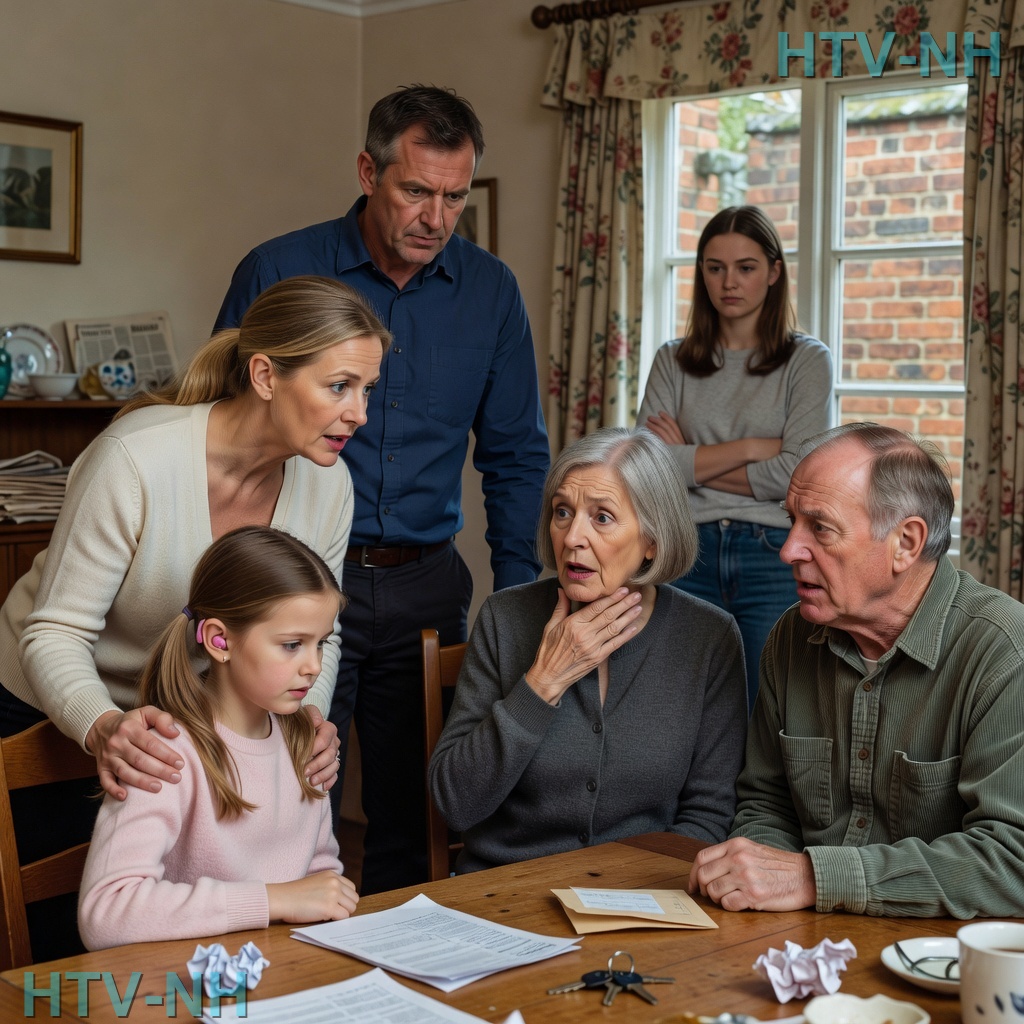
They mocked my daughter’s hearing aid. My husband showed them the door. By morning, they realized who actually paid for their luxury.
My six-year-old daughter, Maya, had been wearing her new pink hearing aids for exactly forty-eight hours. Two days. That was all the time she got to feel like a normal, happy child before my own family ripped that confidence away over a plate of pot roast—a dinner, ironically, that I paid for.
Maya was understandably anxious that evening. She kept adjusting the volume and gently touching the small, pink devices behind her ears. To her, “pink sounds happy.” For the first time, she could hear the birds outside and her dad whispering “I love you.” She wasn’t misbehaving; she was discovering a whole new world.
Then, my older sister, Jennifer, pointed her fork across the table and sneered, “God, can she stop playing with that thing? She looks like a little robot.”
The dining room fell into a suffocating silence. Nobody gasped. Nobody defended her. They were all just waiting to see if I would make a scene.
Maya’s hand dropped. She looked around the table, searching for an adult to protect her. Instead, my father took a calm sip of his wine and chuckled. “Relax, Emma. Don’t be so sensitive. It’s just a joke.”
My mother offered her signature tight smile—the one she uses when she expects me to swallow poison and pretend it’s wine. Then Dad added, “Maybe she can hide it with her hair. It kind of ruins the family image.”
The family image. Those words stung worse than the insult. For years, I had quietly bankrolled that very “image.” My parents’ country club membership? Me. Jennifer’s kids’ private school tuition? Me. My brother Tom’s failed business bailouts, Mom’s medical bills, Dad’s leased Mercedes, the landscaper, the credit cards… all me. They thought I just did “little computer projects” from home while my husband David paid our bills. They had no idea I am the CEO of Aura Acoustics, a medical tech company valued at over $1.2 billion. The very hearing aids they were mocking existed because of my patents and my algorithms.
I froze, paralyzed by shock. But David didn’t.
Without a word, my husband stood up. His chair scraped harshly against the floor. He walked over to the front door, threw it wide open, letting the freezing winter air rush in, and turned to my family.
“Dinner is over,” David said, his voice terrifyingly calm.
Jennifer scoffed, “Are you serious?”
“Completely,” David replied. “You don’t get to insult my daughter in our presence. Get your coats.”
My father’s face flushed red. “This is my house!”
“And that is my daughter,” David shot back.
The drive home was dead silent. Seeing Maya asleep in the back, with that little pink device catching the streetlights, filled me with intense shame.
“You didn’t buy their love, Emma,” David said softly, keeping his eyes on the road. “You bought their tolerance.”
His words shattered me because he was right. I was just the family bank. The useful, invisible daughter.
When we got home, the real heartbreak hit. While changing into her pajamas, Maya looked up with tear-filled eyes and whispered, “Mommy, am I broken? Grandma and Aunt Jennifer laughed… Do I look scary?”
That was the exact moment the submissive daughter died inside me. I knelt down, held her tightly, and told her she was perfect. Once she fell asleep, I walked straight into my office.
Staring at my three glowing monitors, I opened the spreadsheet I had come to hate: Family Support Master.xlsx.
Jennifer’s tuition: $7,500/month. Cancelled.
Parents’ country club: $1,500/month. Cancelled.
Mercedes lease, cleaning services, credit cards… Stop payment.
With a few cold, deliberate clicks, I cut off every single lifeline. By 11:00 PM, the Bank of Emma was officially closed.
The fallout was instant. At 9:15 the next morning, Jennifer texted: “Emma, the school tuition bounced. Fix it ASAP.” No “Are you okay?”, no apology. Just a demand.
I replied with three words: “I cancelled it.”
By noon, my parents violently pulled into my driveway. My father pounded on the door, shouting, “Open this door right now! You cut us off over a joke?!”
I opened the door, stepped aside, and led them to the dining table. I flipped my laptop around to face them. The screen displayed the latest Forbes annual report. My face was on the cover under the headline: CEO Emma Henderson Leads Aura Acoustics To $1.2 Billion Valuation.
My father’s jaw dropped. My mother’s hand flew to her throat. For the first time in thirty-two years, they finally saw who I really was.
————————————————————————————————————————
At family dinner, my sister mocked my daughter’s hearing aid. My dad said, “It’s just a joke. Lighten up.” I stayed quiet. But my husband stood up. Without a word, he showed them the door. When they discovered next morning… My name is Emma. I am 32 years old and I live in a quiet suburban town in the United States. My father always said family comes first.
But he didn’t mean my family. He meant his comfort, his image, and his golden child. My sister Jennifer. It happened over a pot roast I had paid for in a house I was secretly keeping afloat. My six-year-old daughter Maya was sitting next to me. She was nervous. She had just gotten her hearing aids two days ago.
They were small and pink, and she was so proud of them because they finally let her hear the birds outside. She reached up to adjust the volume because the clinking of silverware was a little loud for her new ears. That was all it took. Jennifer pointed her fork right at my daughter’s face. God, can she stop fiddling with that thing? She looks like a little robot girl. I froze.
I looked at my mother. I looked at my father. I waited for them to protect their grandchild. Instead, Dad took a sip of wine and chuckled. Relax, Emma. Don’t be so sensitive. It’s just a joke. Just tell her to hide the device with her hair. It affects the whole family image. My husband, David, didn’t say a word. He just stood up, walked to the front door, and opened it wide.
The cold air rushed in, but it was nothing compared to the ice in his eyes as he looked at my parents. But before I tell you how everything flipped, like and subscribe. Drop a comment: where are you watching from? My name is Emma. I am 32 years old. The drive home from my parents house was silent. Usually, David and I would debrief after a family dinner.
We would talk about the food or some sports game my dad mentioned or how much the kids had grown. But tonight, the silence in the car was heavy. It felt like there was a physical weight sitting on the back seat between us and Maya. Maya was asleep in her car seat. I checked the rearview mirror every 30 seconds just to make sure she was okay.
Her head was tilted to the side, her mouth slightly open. I could see the faint outline of the pink plastic device behind her ear. “It’s just a joke,” my dad had said. The words replayed in my head like a broken record. “It’s just a joke. Don’t be so sensitive.” I gripped the steering wheel so hard my knuckles turned white.
David was driving, staring straight ahead at the dark road. I could see the muscle in his jaw jumping. He was furious. He had every right to be. But underneath his anger, I felt my own shame burning a hole in my stomach. I hadn’t defended her fast enough. David had to open the door. David had to kick them out. I had frozen.
Why did I freeze? Because for six years, I had trained myself to freeze. I had trained myself to be invisible. I had trained myself to be the wallet, the fixer, the safety net, but never the person with a voice. It started six years ago. That was when I launched my company, Aura Acoustics. Nobody in my family knew what I actually did.
To them, I was just doing some computer stuff or freelancing. They didn’t understand technology and they didn’t care to learn. When I tried to explain that I was developing new algorithms for hearing assistants, my mother would wave her hand and say, “That sounds boring, dear. Pass the salad.” So, I stopped trying to explain.
I let them think I was scraping by. I let them think I was lucky to have a husband like David who worked in construction management. They thought David paid our bills. They thought I was a stay-at-home mom with a hobby. But the truth was sitting in a bank account they couldn’t see. The first time I paid for them, it wasn’t a big decision. It was an emergency.
My dad had a heart scare. The insurance didn’t cover the specific specialist he needed. My mom was crying at the kitchen table looking at a bill for $5,000. “We just don’t have it,” she had sobbed. “We’ll have to go to the general clinic.” I couldn’t watch them suffer. I went to the bathroom, transferred the money to my personal checking account, and came back out.
I have some savings. I lied. From a project I finished, I can pay it. They didn’t ask where the project came from. They didn’t ask if I needed that money for rent or groceries. My mom just snatched the check from my hand and said, “Thank God. At least you’re good for something.” That was the phrase that stuck. At least you’re good for something.
It became a pattern, a terrifying, expensive pattern. Three years ago, my sister Jennifer got divorced. She wanted her kids, Leo and Sarah, to go to Westbrook Academy. It is the most elite private school in the state. The tuition is $45,000 a year per child. Jennifer didn’t have a job. She had alimony, but it wasn’t enough for Westbrook.
She called a family meeting. She cried about how her children needed stability. She looked at my parents, who were retired and on a fixed income. Then she looked at me. Emma,” she said, wiping her eyes. “You don’t have a mortgage, right? David built your house. Maybe you could contribute. It’s for the family legacy.” I wanted to scream.
I wanted to say, “My husband built our house with his hands, but I paid for the land and materials with my hard work, but I didn’t. I looked at my niece and nephew. I loved them. I didn’t want them to suffer because their mother was irresponsible.” “Okay,” I said. “I’ll handle the tuition. Direct deposit is best, Jennifer said instantly.
She stopped crying immediately. I’ll send you the school’s routing number. $90,000 a year for three years. That is $270,000. Did she ever say thank you? No. Last Thanksgiving, she told the table, “It’s so hard raising kids alone. I do everything by myself. Nobody helps me.” I was sitting right there. I was chewing my turkey, swallowing the rage along with the dry meat.
I had paid for her children’s education and she claimed nobody helped her. Then there was the country club. My parents had been members for 30 years. It was their entire social life. When dad retired, the $18,000 annual fee became a burden. They were going to quit. I couldn’t let them lose their friends. I set up an autopay for my business account.
I told them, “Don’t worry, I handled it.” Dad slapped me on the back. Good girl. Keep the family name on the locker. He didn’t treat me like a successful daughter. He treated me like a vending machine that occasionally dispensed favors. Then came the car, my dad’s Mercedes. He needed it for appearances. Another lease I took over.
Then my mom’s holistic medical treatments that weren’t covered by insurance. Another credit card I paid off every month. And finally, my brother Tom. Tom was the entrepreneur of the family. He had started a craft brewery, a gym, and a consulting firm. All of them failed. Last year, he needed a bridge loan of $50,000 to keep his latest venture, a custom sneaker business, afloat.
I just need a leg up, Emma, he had said, cornering me in the kitchen. You know how it is. You do your little computer work. You know, business is hard. Little computer work. My company had just signed a contract with three major hospital systems in Europe. I was managing 200 employees. But to Tom, I was just his little sister doing computer work.
I gave him the money. I didn’t call it a loan. I knew I would never see it again. I did the math in my head as we drove down the highway. Tuition $270,000. Country club $54,000. Cars and medical $80,000. Tom’s loans $100,000. Over half a million. I had spent over half a million on people who just called my daughter a robot.
I looked at David. He was still driving, his eyes fixed on the road. “You know,” David said quietly, breaking the silence. “You didn’t buy their love, Emma,” I flinched. “I know. You bought their tolerance,” he said. His voice wasn’t mean. It was just sad. You paid them a salary to tolerate us, and tonight they decided the price wasn’t high enough. I closed my eyes.
He was right. I was the family workhorse. I pulled the cart, and they sat in the back, whipping me to go faster while laughing at how ugly the horse looked. They assumed I helped because I had no choice. They thought I was desperate for their approval. They thought I was weak. They had no idea that the weak sister held the deed to their entire lifestyle.
We got home around 8:30 p.m. The house was quiet. It was our sanctuary. David carried Maya inside. She woke up a little as he unbuckled her, rubbing her eyes with her small fists. “Are we home?” she whispered. “Yes, baby,” David said. He kissed her forehead. “We’re home safe and sound.”
He carried her upstairs to her room. I followed, carrying her small backpack with her coloring books and the extra batteries for her hearing aids. My legs felt heavy. Every step up the stairs felt like climbing a mountain. I went into the bathroom to start the bath. I turned on the water, watching the steam rise. I tried to wash the evening off my skin.
I scrubbed my hands, but I still felt dirty. I felt the grime of my family’s words clinging to me. Robot girl, hide it. Broken. I went into Maya’s room. She was sitting on the edge of her bed, swinging her legs. David was helping her take off her shoes. Mommy, Maya said. I forced a smile. I am good at masking. I have done it my whole life.
Yes, sweetie. Ready for a bath? She reached up and touched her ear. She carefully pulled out the left hearing aid, then the right one. She held them in her hands. They were small, high-tech pieces of engineering. My engineering. I had designed the compression algorithm that made them work so well in noisy environments. I had built them to help people like her.
She looked down at the pink plastic devices. Grandma said, “I’m broken,” she said. Her voice was so small. It wasn’t a question really. It was a statement. She was checking a fact. My heart stopped. The room went silent. I looked at David. He looked like someone had punched him in the stomach. I knelt down in front of her. I took her small hands and mine.
“No, Maya, look at me.” She looked up. Her big brown eyes were filled with tears that hadn’t spilled yet. “Grandma was wrong,” I said. My voice shook. “You are not broken. You are perfect.” “These,” I pointed to the hearing aids. “These are just like glasses. You know how daddy wears glasses to see better. These help you hear better. That’s all. You’re strong and smart and beautiful.”
But Aunt Jennifer laughed. Maya whispered. A single tear rolled down her cheek. She said, “I look like a robot. Do I look scary?” I pulled her into my arms. I buried my face in her hair so she wouldn’t hear me gasp. I felt a rage so hot it almost burned me. It wasn’t the annoyance I felt at the dinner. It was a primal mother-bear fury. They hadn’t just insulted me.
They had planted a seed of shame in my six-year-old daughter. They had taken her confidence, which was so new, so fragile, and crushed it for sport. “You do not look scary,” I told her, pulling back and looking her in the eyes. “You look like a superhero. You have bionic hearing. That makes you special. She sniffled. Really? Really?
I got her through the bath. I got her into her pajamas. I read her two stories instead of one. I stayed in her room until her breathing slowed down and she fell asleep. I stood by her doorway for a long time watching her sleep. The moonlight came in through the window. She looked so peaceful. Then I remembered the spreadsheet.
I walked out of her room and closed the door softly. David was in the hallway. He was leaning against the wall, his arms crossed. She heard everything, David said. I know, I replied. Emma, we can’t go back there, he said. I don’t care who they are. I don’t care if they are your blood. They are poison.
If we go back, we are telling Maya that it’s okay for people to treat her like that. I looked at my husband. He was the only family I needed. Him and Maya. We aren’t going back, I said. My voice was steady. It surprised me. And they aren’t going to treat anyone like that ever again. What do you mean? I mean, I said, walking past him toward my home office.
I’m done being the ATM. I’m done being the heavy lifter. I’m going to drop the weight. Emma, David warned. If you cut them off, they will explode. It’s going to be ugly. Let it be ugly. I said, “It’s been ugly for me for 30 years. Now it’s their turn.” I walked into my office. It was a sleek, modern room. I had three monitors set up.
This was the command center of Aura Acoustics. This was where I managed a global supply chain. This was where I made executive decisions that affected millions of dollars. Here, I wasn’t the little sister. Here, I was the CEO. I sat down in my leather chair. The leather was cool against my back. I woke up my computer. The screens glowed to life, illuminating the dark room.
It was time to look at the numbers. It was time to look at the truth. The file was named Family Support Master.xlsx. I hated this file. I had created it four years ago to keep track of where my money was going, mostly for tax purposes and my own sanity. I clicked on it. It opened instantly. A grid of colorful cells and endless numbers. I scrolled down.
Row four, Jennifer Education Trust. Status active. Monthly autodraft. $7,500. I stared at the number $7,500 a month. That was more than most people made in three months. I paid that so Jennifer could drive her Range Rover to the pickup line and brag about how her kids went to Westbrook. I remember Jennifer’s face at dinner tonight. The way she pointed her fork. The way she sneered.
Robot girl. My hand moved to the mouse. I didn’t feel sad. I didn’t feel guilty. I felt cold. I felt precise. I opened my banking portal in a separate window. I logged in. The interface was familiar. I navigated to recurring transfers. There it was. Westbrook Academy. I clicked edit. Then I clicked cancel series. A popup box appeared.
Are you sure you want to cancel this recurring payment? Yes, I said out loud to the empty room. I am sure. Click status canceled. I went back to the spreadsheet. I highlighted the row red. Next. Row 12. Mom and dad country club membership. Status active. Monthly autodraft. $1,500. I thought about my dad. It’s just a joke. Don’t be so sensitive.
He cared more about his golf handicap than his granddaughter’s dignity. He wanted the prestige of the club, but he didn’t want the daughter who paid for it. He wanted the money, but he didn’t want the connection. Fine, he could have the connection or lack thereof. I went to the bank tab, found the country club transfer. Click, cancel, confirm. Gone.
I felt a strange sensation in my chest. My heart was beating slower, not faster. It was a release. Every click was like cutting a heavy sandbag off a hot air balloon. I was getting lighter. Row 15, dad Mercedes lease. Status active. Autopay cancel. Row 22. Mom, Dr. Arington specialist. Status active. Credit card on file. I logged into the credit card portal.
I removed my card from the authorized user list for the clinic. Cancel. Row 30. Tom, business support loan. Status. Monthly transfer. $2,000. Tom, my big brother, the one who used to lock me out of the house when we were kids. The one who told me my business idea was cute but would never scale. He was using my money to pay rent on a warehouse for shoes that nobody was buying.
I didn’t just cancel the transfer. I called the bank’s automated line to put a stop payment on the check that was scheduled to go out tomorrow morning. Click cancel. Confirm. I worked down the list. Netflix subscriptions, phone plans, the landscaper who did my parents’ yard, the cleaning service for Jennifer’s house. I paid for all of it. I had wrapped them in cotton and insulated them from the real world.
I had created monsters. I had fed them, and when they got big and strong, they tried to eat my child. It took me 45 minutes. When I was done, the active column was empty. The scheduled payments tab in my bank account was blank. I sat back in my chair. The room was silent. My phone was sitting on the desk. It was black and quiet. It was 11 p.m.
They were all asleep. They were sleeping in beds I paid for, dreaming dreams I subsidized. They had no idea that while they slept, the ground beneath them had disappeared. I closed the laptop. The click of the lid shutting sounded like a gunshot in the quiet house. I stood up and walked to the window. I looked out at the street. It was dark.
I’m sorry, I whispered, but I wasn’t talking to them. I was talking to the old Emma. The Emma who tried so hard to be good. The Emma who thought she could buy her way into a family photo. She was gone now. And the woman who replaced her wasn’t writing any more checks. The morning started like any other Tuesday. I made coffee. I made oatmeal for Maya.
I packed her lunch. A turkey sandwich cut into star shapes. I put a little note in her lunchbox that said, “I love you, Supergirl.” Maya seemed okay. Kids are resilient. She was playing with her cereal, but she wasn’t wearing her hearing aids. They were sitting on the counter. “Do you want to put your ears on?” I asked gently. She shook her head. “Not today.” “Okay,” I said.
I didn’t push. Maybe later. That small refusal, her fear of her own device, hardened my resolve like concrete. David took Maya to school. I stayed home. I sat at the kitchen island with my coffee and my phone. It started at 9:15 a.m. My phone buzzed. It was Jennifer. I didn’t answer. I took a sip of coffee. It buzzed again immediately. Then a text.
Jennifer, Emma, the school just called. They said the tuition transfer bounced. It’s embarrassing. Fix it ASAP. I stared at the screen. Fix it. Not please. Not is something wrong. Just a command. I typed back. I canceled it. I watched the three little dots appear instantly. Jennifer, what do you mean you canceled it? Is this a joke?
They’re going to kick Leo and Sarah out of class if it’s not paid by noon. Emma, then you should probably go pick them up. My phone started ringing. Jennifer again. I declined the call. Five minutes later, my dad called. I let it go to voicemail. 10 minutes later, the house phone rang. We still had a landline for emergencies. I let it ring.
By 10:00 a.m., my phone was vibrating so constantly it was moving across the counter. Mom, Emma, Dr. Arington’s office said the card was declined. I’m at the front desk. This is humiliating. Call them now. Tom. Yo, the transfer didn’t hit. I have a vendor waiting. What’s going on, Dad? Pick up the phone. The club manager just called me.
They said our membership is suspended for non-payment. Do you have any idea how bad this makes me look? It was a symphony of entitlement. Not a single person asked if I was okay. Not one person asked if I had lost my job or if I had been hacked or if I was sick. They only cared that the tap had run dry. I finished my coffee. I washed the mug.
I dried it and put it away. Then I sat down and sent one group text to all of them. Mom, Dad, Jennifer, Tom, Emma, I am no longer funding your lives. The transfers are cancelled. The cards are closed. Do not ask me for money again. Handle your own expenses. I put the phone down. The reaction was nuclear. Jennifer sent 20 texts in a minute.
She called me selfish, cruel, a monster. She said I was punishing innocent children. Jennifer, how can you do this to Leo and Sarah? They love that school. You are destroying their future because of a little joke at dinner. You are psychotic. I replied, you can pay for their future. You are their mother. Tom texted. I’m going to lose the warehouse. You promised to help. We had a deal.
I replied, we didn’t have a deal. I was giving you a gift. The gift is over. My dad left a voicemail. I listened to it on speaker phone. His voice was shaking with rage. Emma, you listen to me. You fix this right now. You don’t embarrass this family. You don’t hold money over our heads like some some tyrant. You unfreeze those accounts or don’t bother coming to Christmas.
I laughed. It was a dry humorless sound. Christmas? He thought threatening me with less time with them was a punishment. David, I called out. David had just walked back in the door. Yeah, we’re free for Christmas, I said. He looked at my phone, which was lighting up like a disco ball. He looked at the calm expression on my face. They noticed, he asked.
Oh, they noticed? I said. Jennifer is getting kicked out of Westbrook. Dad lost the club. Mom is stuck at the doctor’s office. Are you okay? David asked. He walked over and put his hands on my shoulders. I took a deep breath. Was I okay? My family hated me. They were calling me names. They were panicking. Their lives were falling apart because I refused to carry them anymore.
But then I looked at the counter where Maya’s hearing aids were sitting. I thought about her face when she asked if she was broken. I’m better than okay, I said. I’m free. But it wasn’t over. I knew them. They wouldn’t just text and call. They would come here. They would demand a face to face. They would try to bully me into submission like they always did.
They thought I was just throwing a tantrum. They thought I would cave in an hour. They were about to find out that I wasn’t just a sister or a daughter anymore. I was a CEO who had just fired her worst employees. Around noon, a car pulled into the driveway. It was my parents. Dad slammed the car door so hard I felt it in the floorboards.
“Here we go,” David said, stepping in front of me. “No,” I said, moving him aside gently. “I’ve got this.” I walked to the front door. I didn’t open it. I waited. Dad pounded on the glass. “Emma, open this door. We need to talk.” I unlocked it and opened it. I stood in the doorway. I didn’t invite them in. “What is wrong with you?” Mom screamed.
She looked frantic. Her hair was messy. “Do you know how embarrassing it was?” The receptionist cut up the card in front of me. “You cut us off,” Dad shouted. His face was red. “Because of a joke. You ruined the family over a joke.” “It wasn’t a joke,” I said. My voice was low and steady. It was abuse and I’m done paying for my abusers to live in luxury.
“Abusers,” Dad scoffed. “We are your parents. We gave you life and I gave you a lifestyle,” I said. “For six years, I paid for everything and you treated me like dirt. You treated my daughter like a freak.” We didn’t. Mom cried. We love Maya. Jennifer was just She was just stressed. She didn’t mean it. She meant it. I said, “And you laughed. You all laughed.”
So what? Dad yelled. You’re going to bankrupt us. You’re going to let your brother fail. You have the money. We know David makes good money. You’re just being greedy. I stared at them. They still didn’t get it. They thought this was David’s money. They thought I was hoarding my husband’s earnings. David doesn’t pay for your lifestyle. I said, “What?” Mom frowned.
Of course he does. You don’t work. You just do your little computer thing. It was time. Come inside, I said coldly. Sit at the table. I have something to show you. They looked confused by my change in tone. They walked in hesitantly. They sat at the dining room table. I walked to my office and grabbed my laptop. I brought it out and set it down in front of them.
“You think I’m a freelancer?” I said. “You think I’m a housewife with a hobby?” I turned the laptop around so they could see the screen. I had pulled up the Aura Acoustics annual report. My face was on the cover. The headline read, “CEO Emma Henderson leads Aura to $1.2 billion valuation.” “Read it,” I said. Dad squinted at the screen.
He adjusted his glasses. He read the headline. He froze. Mom looked at the picture. Then she looked at me. Then back at the picture. CEO. Dad whispered, “Billion.” I own the company. I said, “I built it. Every dollar you spent, the tuition, the club, the cars, came from me, from my brain, from my hard work. The same hard work you mocked.
The room went dead silent. The clock on the wall ticked loudly. Tick, tick, tick. They were staring at me like I was an alien. They weren’t looking at their daughter. They were looking at a stranger. A very, very rich stranger. And here is the irony, I said, leaning forward, placing my hands on the table. My company makes medical devices. We make hearing aids.
The device you mocked, the one Jennifer called robot parts. That device made me a fortune. That device paid for your country club. I saw the realization hit them like a physical slap. So I stood up straight. Get out of my house and don’t come back until you learn some respect. But don’t expect the money to ever turn back on. That part of our relationship is dead.
The silence in my dining room was thick enough to choke on. My parents were still staring at the laptop screen. my face, their daughter’s face, looked back at them from the digital annual report. Billion with a B, my dad stammered. His voice was barely a whisper. All the bluster, all the anger he had walked in with had evaporated. It was replaced by shock.
Yes, I said with a B. My mother reached out a shaking hand and touched the screen as if she needed to verify it was real. But you said you were doing freelance work. You said it was just projects. I told you I was building a company. I corrected her. Six years ago, I told you I had a startup. You told me it was a cute hobby and asked if I could knit you a scarf instead.
She flinched. She remembered. I could see it in her eyes. We didn’t know, she whispered. Emma, we didn’t know it was this because you never asked, I said. You never asked me a single question about my work. Not once. You asked David about his construction jobs. You asked Tom about his failed sneaker ideas for hours. But me, you just assumed I was nobody.
Dad looked up from the screen. His eyes were wide. He wasn’t looking at me with pride. He was looking at me with calculation. I could see the gears turning in his head. He was doing the math. If his daughter was a billionaire, then the country club membership was nothing. It was pocket change. Emma, he said, his voice suddenly smooth, almost oily. This is This is incredible.
Why didn’t you tell us? We would have celebrated you. We would have been so proud. I felt a wave of nausea. You would have been proud of the money, I said. Not me. You would have been proud that you could brag to your friends that your daughter was rich, but you wouldn’t have cared about the work. You wouldn’t have cared about the science.
That’s not true, Mom said, trying to smile. It was a terrifying, brittle smile. We are your family. We love you. This This changes things. It changes nothing, I said. It just exposes you. What do you mean? Dad asked. It means, I said, pointing at the screen. that you have been living off the very thing you mocked. You made fun of Maya’s hearing aid.
You called her a robot. But that hearing aid, that technology is what paid for your Mercedes dad. It’s what paid for your holistic doctor’s mom. You were biting the hand that fed you, and you were laughing while you did it. Dad’s face flushed red again, but this time it wasn’t anger. It was embarrassment. Deep humiliating embarrassment. He realized how small he looked.
“We were just joking,” he mumbled again. But the excuse sounded weak even to him. You weren’t joking, I said. You were cruel. And now the joke is over. Just then my phone buzzed on the table. It was Jennifer, then Tom. They are texting you, aren’t they? I asked. Mom nodded. Jennifer is at the school. She She can’t get the transcripts unless the balance is paid.
She can’t enroll them in public school without the transcripts. That sounds like a problem for Jennifer, I said. Emma, Dad said, standing up. He tried to look authoritative, but his knees were shaking. You have to fix this. You have this empire. You have endless money. To you, paying her tuition is like buying a cup of coffee. Don’t be petty. Just pay it and we can all move past this. Petty?
I laughed. You think this is about the money? You think I care about the cash? I walked over to the window. I looked out at the driveway where their car sat, the car I paid for. I would have given you everything, I said softly. I did give you everything. I would have bought you a house. I would have sent all your grandkids to college.
I would have taken care of you until the day you died. I didn’t care about the cost. I turned back to face them. But you hurt my daughter. You made her feel broken. And you can’t buy forgiveness for that. Not with a billion dollars. She’s a child. Dad shouted. She’ll forget. She won’t, I said. And neither will I. I pointed to the door. Leave. The lease on the Mercedes is up next month.
I’m not renewing it. You might want to start looking for a used Honda. My dad opened his mouth to scream, but he looked at my face and stopped. He saw something he had never seen before. He didn’t see his doormat daughter. He saw a CEO. He saw power. He grabbed my mother’s arm. Come on, Linda. Let’s go. But mom started. Let’s go. He snapped. They walked out.
They looked smaller than when they arrived. They looked old. I closed the door behind them and locked it. I leaned my forehead against the cool wood. My heart was pounding, but my hands were steady. I had done it. I had revealed the secret. And the look on their faces, the shock, the greed, the shame was worth every penny I had ever spent.
The next two weeks were a masterclass in consequences. I didn’t do anything malicious. I didn’t sue them. I didn’t slander them. I simply stopped. I removed my hands from the wheel of their lives. And without me steering, they crashed immediately. Jennifer was the first to fall. She couldn’t pay the Westbrook tuition. She tried to negotiate with the headmaster.
She tried to cry in his office, but private schools are businesses. No money, no seat. She had to pull Leo and Sarah out mid-semester. It was a small town scandal. Everyone knew the perfect mom who looked down on everyone else was suddenly filling out paperwork for the local public elementary school. I heard from a friend that Jennifer had a meltdown in the grocery store when her card was declined for a bottle of expensive wine.
She had to put it back. Tom was next. My brother, the entrepreneur, without my monthly injection of cash, his warehouse rent went unpaid. The landlord locked him out in three days. Tom tried to call me 50 times. I blocked his number. He had to move all his unsold shoes into his garage. His wife, who had gotten used to the lifestyle I funded, was reportedly furious.
She told him to get a real job. For the first time in his life, at age 34, Tom had to update his resume. He got a job as a shift manager at a car rental agency. It was honest work. It was good work. But for Tom, who thought he was the next Elon Musk, it was a humiliation. And my parents, the country club was their identity.
It was where they ate lunch, where they played bridge, where they gossiped. When their membership was revoked, they lost their social circle. Their friends stopped calling when they couldn’t host dinners anymore. Dad had to return the Mercedes. I got an email from the dealership confirming the return. He had apparently argued with the sales manager for an hour claiming there was a banking error, but the lease was in my name and I had canceled the authorization.
He ended up buying a 10-year-old sedan. Mom’s holistic treatment stopped. She had to go to a regular doctor in her insurance network. She complained to anyone who would listen that her daughter had abandoned her. But here is the thing about small towns. People talk and people knew me. They knew David. They knew we were quiet, kind people.
And they knew my parents were snobs. The rumor mill didn’t side with them. It sided with the truth. People started whispering, “Did you hear? The Hendersons were broke.” Apparently, their daughter was paying for everything and they treated her like garbage. Their social standing crumbled like a sand castle at high tide. I watched it all from a distance.
I didn’t feel glee. I didn’t feel happy about their suffering. I just felt balanced. For years, the scales had been tipped. They took, I gave. They hurt, I healed. Now, the scales were even. They were experiencing the reality of their own choices. One afternoon, I was at the park with Maya. She was on the swings, pumping her legs higher and higher.
She was wearing her hearing aids. She had put them back on three days after the dinner. “Look, Mommy, I’m flying,” she yelled. “I see you,” I called back. I saw a woman walking toward me. It was Mrs. Gable, one of my mom’s bridge friends from the club. I tensed up. I expected a confrontation. Mrs. Gable stopped near the bench.
She looked at me then at Maya. She’s a beautiful little girl, Emma, Mrs. Gable said. Thank you, I said guardedly. Your mother told us told us some things, Mrs. Gable said. She hesitated. She said you cut them off. She said you were cruel. I didn’t say anything. I just looked at her. But then, Mrs. Gable continued, “I saw how your father yelled at the waiter last week before they were asked to leave.
And I remembered how they used to talk about you. Always. Poor Emma. Always. Emma doesn’t have much going on.” She shook her head. “I think I think you probably did the right thing. Good for you, honey.” She walked away. I let out a breath I didn’t know I was holding. I wasn’t the villain. I wasn’t the bad guy. I was just a woman who finally stood up.
My lawyer called me a few days later. “Emma,” he said. Your father contacted my office. He’s asking if there is a way to restructure the support payments. He’s calling it a family stipend. I laughed. He wants a salary for being my dad. Essentially, the lawyer said he says they have become accustomed to a certain standard of living.
Tell him, I said that the standard has changed. Tell him the bank of Emma is permanently closed and if he contacts you again, bill him for the hour. Understood, the lawyer said. And Emma, yes, I’m proud of you. Most clients cave if you’re strong. I have to be, I said, watching Maya jump off the swing and land in the sand, laughing. I have someone watching me.
Three weeks after the dinner, on a rainy Tuesday evening, the doorbell rang. David was at work. Maya was in the living room watching cartoons. I looked at the security camera feed on my phone. It was my mother. She was alone. She wasn’t wearing her usual designer trench coat. She was wearing a simple raincoat. She looked wet and small.
I debated not opening the door, but she was my mother and she was alone. I opened the door. What do you want? She didn’t barge in. She didn’t yell. She just stood there shivering slightly. Can I come in? She asked. Just for a minute. I promise I won’t stay. I stepped aside. One minute. She walked into the foyer. She didn’t go further. She dripped water onto the rug.
She looked around the house, my house, as if seeing it for the first time. She noticed the artwork. She noticed the calmness. “I didn’t know,” she said. Her voice was shaky. Didn’t know what. I didn’t know you were this. She gestured vaguely at the air. I didn’t know you were successful. I didn’t know you were strong. I was always strong, Mom.
I said you just didn’t look. She looked down at her hands. Your father, he’s angry. He’s so angry. He feels like a fool. He should, I said. He misses the car, she said. A weak attempt at a joke. I didn’t smile. I miss I miss us, she said. Tears started to well up in her eyes. I miss Sunday dinners. I miss the family being together. We weren’t together, Mom, I said gently.
We were in the same room, but we weren’t together. You were with Jennifer. You were with Tom. I was just the staff. I was the sponsor. That’s not true, she sobbed. I loved you. Did you? I asked. Did you love me when you let Jennifer mock Maya? Did you love me when you told me to hide my daughter’s disability so I wouldn’t embarrass you? She flinched. The truth hit her hard.
I I was trying to keep the peace, she stammered. Jennifer has always been difficult. I just wanted everyone to get along. So, you sacrificed me, I said. You sacrificed Maya to keep Jennifer happy. That’s not peace, Mom. That’s betrayal. She started to cry harder. I’m sorry, Emma. I’m so sorry I messed up. We all messed up. It was the first time in 30 years I had heard my mother apologize.
It sounded sincere. She looked broken. Part of me, the little girl inside me, wanted to hug her, wanted to say, “It’s okay. I’ll fix it. Here’s a check. Stop crying.” But I looked into the living room. I saw the back of Maya’s head. I saw her adjusting her hearing aid without shame. I accept your apology, I said. Mom looked up, hope lighting her face.
“Really? So, can we fix this? Can we go back to how it was?” “No,” I said. The hope vanished. “I forgive you,” I said. “For my own peace. I forgive you for being weak. I forgive you for not protecting us, but we are not going back. You don’t get access to my life anymore. You don’t get access to my daughter. But family, she whispered.
Family protects each other. I said, you didn’t protect us. You are welcome to call on birthdays. We might come to Thanksgiving in a few years. But the money, the support, the constant access that is gone forever. She stared at me. She realized I wasn’t punishing her. I was setting a boundary, a permanent, concrete boundary. And mom, I added, “Yes, you said you didn’t know I was successful.
You said that’s why you treated me that way.” She nodded. That makes it worse. I said, “You didn’t value me when you thought I had nothing. Why would money change that? If you only love me because I’m a CEO, you don’t love me at all.” She stood there for a long time. The silence stretched. Finally, she nodded. She understood. “Okay,” she whispered. “Okay.”
She turned around and opened the door. The rain was still falling. “Goodbye, Emma,” she said. “Goodbye, Mom,” I said. She walked out to her car. “I watched her drive away. I didn’t feel sad. I felt clean. I felt like a wound that had been infected for years was finally cleaned out and stitched up. It would leave a scar, but it would heal.”
Six months passed. The change in our house was physical. The air felt lighter. We laughed more. Without the financial drain of the Hendersons, my savings compounded. But more importantly, without the emotional drain, my energy returned. I poured that energy into Maya and I poured it into my work. One morning at breakfast, Maya came running into the kitchen.
She was wearing a bright purple dress and her pink hearing aids. “Mom, look,” she yelled. She spun around. “I’m ready for the presentation.” Today was show and tell at her school. She had decided to show her hearing aids. “My heart squeezed. Six months ago, she wanted to hide them. She thought she was a robot. You look amazing, I said.
What are you going to say? I’m going to tell them how they work, she said excitedly. And how I can hear the teacher even when she’s facing the whiteboard and how my mom invented the special computer inside them, I choked up. You’re going to tell them I invented it. Yeah, she said, “Because you’re a genius.” I grabbed her and hugged her tight. “You are the genius, baby.”
I drove her to school. I walked her to her classroom. I watched through the window as she stood up in front of 20 kids. She took off her hearing aid. She held it up. She wasn’t scared. She wasn’t ashamed. She was proud. “This is my super ear,” she told the class. “It helps me hear better than you.” And my mom made it. The kids didn’t laugh. They leaned forward.
They said, “Cool.” And wow. I walked back to my car with tears streaming down my face. That afternoon, I went to my office. I called a meeting with my CFO, the charitable giving fund. I said, “I want to restructure it.” Okay. He said, “What are you thinking?” I want to start a foundation. I said, “Specifically for children with hearing loss in low-income families.
I want to pay for devices, speech therapy, and this is important education for their families. I want to teach parents how to support their kids.” “That’s a great idea, Emma,” he said. “How much do you want to allocate?” I pulled up the old spreadsheet, the family support file. I looked at the total I used to spend on my ungrateful family. tuition, cars, clubs.
It was over $150,000 a year. Start with $200,000, I said, and we’ll grow it from there. I took the money that was used to silence my family’s toxicity, and I used it to give a voice to children who needed it. I came home that night to a quiet house. David was cooking dinner. Maya was drawing at the table.
There were no frantic texts from Jennifer, no guilt trip voicemails from Dad, no demands from Tom. There was just peace. David handed me a glass of wine. How was your day, CEO? I smiled. It was perfect. We sat down to eat. Maya told us about her presentation. She chattered happily, her voice clear and confident. I looked at my husband.
I looked at my daughter. This was my family, the people who loved me for me, not for my checkbook, not for my utility. The silence from my parents house was deafening, and it was the most beautiful sound I had ever heard. I’m looking at you now. Yes, you. I know why you clicked on this story. I know why you’re still reading.
Maybe you have a sister who makes you feel small. Maybe you have a father who only calls when he needs something. Maybe you have a mother who criticizes your children and calls it advice. Maybe you are the strong one, the fixer, the bank. You tell yourself it’s your duty. You tell yourself but they’re family. You tell yourself that if you just give a little more, suffer a little more, pay a little more, they will finally love you the way you want to be loved.
I need you to hear me, they won’t. You cannot buy respect. You cannot pay for love. And you should never ever bankroll your own abuse. It took me 30 years to learn that. It took seeing my daughter’s heartbreak to finally wake up. Don’t wait that long. If your family mocks your child, if they minimize your struggles, if they benefit from your strength but belittle your worth, walk away.
Close the wallet. Block the number. Lock the door. It will be scary. They will scream. They will call you selfish. They will try to make you feel like the villain in their story. Let them. Because in your story, you are the hero. You are the protector. You are not abandoning them. You are choosing yourself. You are choosing your peace.
You are choosing to save your energy for the people who actually deserve it. I lost a family of leeches and I gained a life of freedom. My daughter knows she isn’t broken. My husband knows he is my partner, not my ATM. And I know that I am enough. Just me. Not Emma the CEO, not Emma the savior, just Emma. And that is worth more than all the money in the world.
So take a deep breath. Look at the spreadsheet of your life. And don’t be afraid to click cancel. Your peace is waiting on the other.
If you came here from Facebook because this story pulled you in, please go back to the Facebook post, tap Like, and comment exactly “Powerful” to support the storyteller. That small action matters more than it seems, and it helps give the writer real motivation to keep bringing more stories like this to you.